Solar Surge Alert: Solar Panel Maintenance Tips, Common Solar Inverter Problems, and What Homeowners Miss
SEIA’s Solar Market Insight 2024 Year in Review shows the U.S. kept pushing solar forward, including a big jump in residential capacity, which grew 27% in 2024 and topped 40 gigawatts installed. I love seeing that momentum. But I’m also the guy getting the calls when the “brand new” system starts acting up and the homeowner realizes what solar panels repair cost feels like after a rushed install or a couple rough seasons.
In this post, I’m going to walk you through what’s driving the surge, what usually fails first, and how to protect your production before a small issue turns into real downtime. I’ll also tell you exactly where Positive Energy Solutions fits in when you need straight answers and clean repair work that doesn’t create new problems or mess with your warranty.
What’s really behind the solar surge in 2026
Here’s what’s really going on. Installers got busy fast, equipment pricing got more competitive, and a lot of systems went in on tight schedules. When the market expands that quickly, the work quality gets uneven. That’s not me being dramatic. That’s every trade when demand spikes and crews are being pushed to “just get it done.”
SEIA’s year review is a solid snapshot of the pace and scale. If you own solar, it’s worth a look so you understand the bigger picture and why service departments are slammed. I’m referencing it because that same growth pressure leads to rushed installs and, later on, higher solar panels repair cost for homeowners who were told solar is set-it-and-forget-it. You can review the data in the solar maintenance tips context right from SEIA.
And when homeowners ask me why their system is underperforming, nine times out of ten it isn’t the panels. It’s the stuff around the panels.
Solar panels repair cost starts with the stuff nobody looks at
Listen, I’m gonna be straight with you. The panel itself is usually the last part to fail. The “solar panels repair cost” headache normally starts with mounting, wiring, roof penetrations, monitoring, and inverters. That’s where the weather beats things up first, and it’s also where sloppy crews leave little mistakes that turn into big ones later. (I’ve seen plenty of “clean looking” installs that were a mess under the hood.)
If you want a baseline for what good upkeep looks like, think routine checks and real troubleshooting, not a guy with a garden hose and a ladder from Home Depot. Midway through the year, I tell homeowners to look at their production trends first, then decide if they need a cleaning, a roof check, or actual diagnostics. If you want a practical overview, Positive Energy Solutions has a solid resource on solar panel maintenance that lines up with what we see out in the field.
Bottom line is you don’t control the weather, but you can control how prepared your system is for it.
Warning signs of underperforming solar panels you should not ignore
Underperforming solar panels can come from shade growth, grime, a failed optimizer, a tripped breaker, or a dying inverter fan. The big mistake is waiting for a “total failure” instead of moving when the early clues show up.
Here are the signs I tell homeowners to watch for.
- A sudden drop in production week over week
- One string producing less than the others
- Monitoring app shows stale data or no communication
- Inverter errors that clear and then come back
- New roof leaks near standoffs or flashings
If you’re not sure what the numbers are telling you, compare apples to apples. Look at a similar sunny day from last month, not last week if the weather was different. Positive Energy Solutions lays out a good starting point on underperforming solar panels and what “normal” looks like across the year.
I’ve seen this play out a hundred times on a service call. People blame the panel, but the app was trying to warn them for months.
Common solar inverter problems and why they drive most service calls
Common solar inverter problems are the number one reason people call us for troubleshooting. Inverters work hard, they build heat, and they don’t tolerate voltage issues, water intrusion, or bad airflow. Some failures are just age and hours. Others are install mistakes that take a while to show themselves.
Typical problems include.
- Overtemperature shutdowns during heat waves
- Arc fault and ground fault trips from damaged wiring
- Communication failures that hide real production issues
- Failed DC disconnects and corroded terminals
And here’s the part nobody likes to hear. A “reset” is not a repair. If you keep seeing the same faults, you need someone to test and verify what’s actually going on. Positive Energy Solutions has a practical walkthrough on common solar inverter problems that matches what we see on rooftops every week.
When inverter issues linger, solar panels repair cost gets uglier because the system keeps losing production while the problem slowly beats up other components.
How extreme heat accelerates solar panel degradation and equipment wear
Hot summers are harder on solar than most homeowners realize. Yes, panel output drops in high heat. The bigger issue is long-term wear on seals, junction boxes, roof penetrations, and electronics. And if you’ve got microinverters under the array, they’re basically living in the hottest zone of your roof all day. That matters.
Let me break it down for you. Heat speeds up material fatigue. Cables get brittle. Plastic ties snap. Roof sealants dry out. You usually don’t notice any of it until a storm hits and water finds the weak spot, or the inverter starts throwing faults on the hottest afternoons.
This is where good service beats cheap service. A crew that actually services solar will look for heat damage during routine visits, not after an emergency call. If your area is getting more intense year by year, set a prevention schedule and tie it into broader system checks. Start with solar maintenance tips so you’re not guessing.
Solar panels repair cost climbs fast when heat stress turns into electrical faults or roof leaks.
Solar panel cleaning service and why DIY cleaning is a common mistake
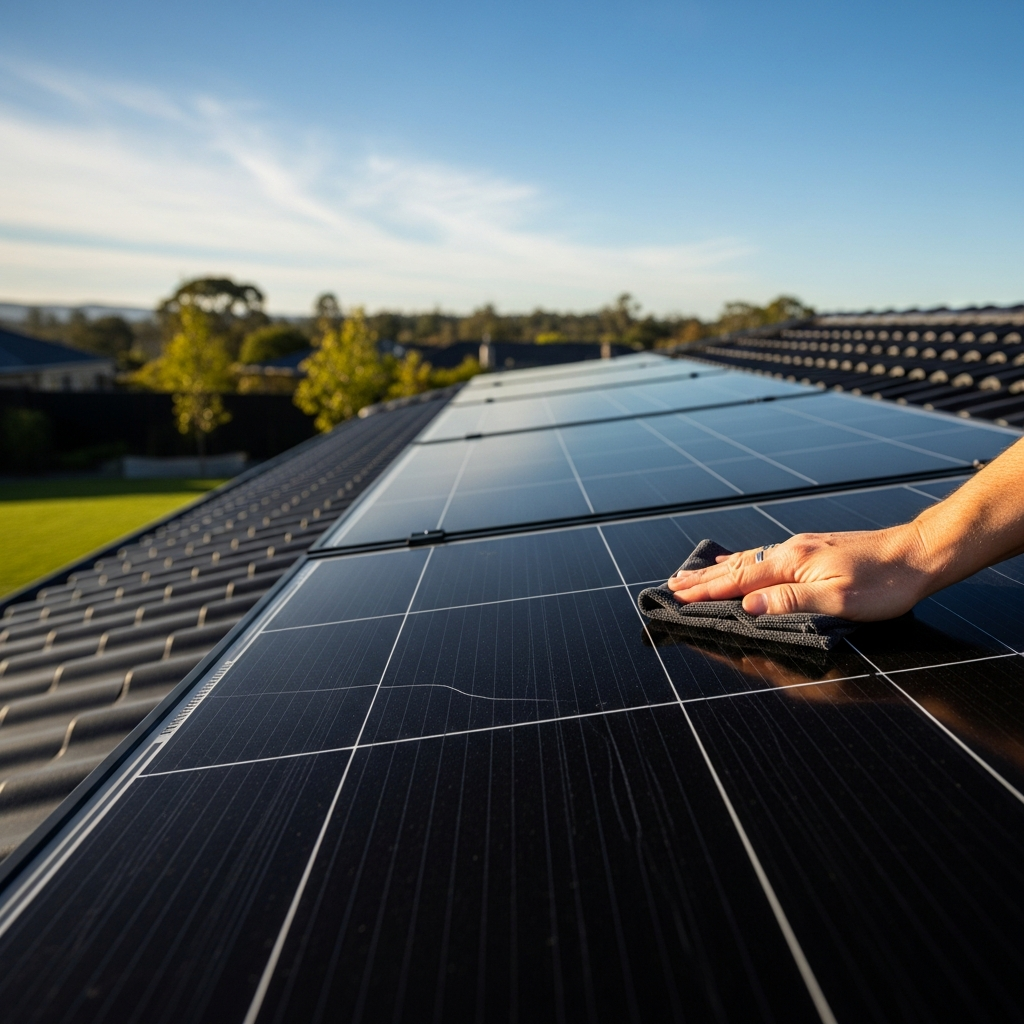
I’m not against homeowners taking care of their systems. I’m against risky roof work and bad cleaning methods. A proper solar panel cleaning service isn’t just about making the glass look shiny. It’s about removing grime without wrecking coatings, and using the visit to check for cracked frames, loose clamps, and early hot spots most homeowners will never catch from the ground.
DIY mistakes I see all the time.
- Pressure washing that drives water into seals
- Harsh chemicals that haze the glass
- Walking near array edges and loosening clamps
- Ignoring bird activity that leads to wiring damage
If you’re not sure what “safe” looks like, read Positive Energy Solutions’ guidance on solar panel cleaning service and use it as your checklist before anyone touches the array.
Clean panels can help, sure. But the inspection part is what saves you from surprise solar panels repair cost later.
Roof leak after solar installation is usually preventable
Your installer should’ve told you roof penetrations are the long game. A roof leak after solar installation can show up years later, long after the crew is gone and the “lifetime workmanship warranty” is just a PDF you can’t get anyone to honor. The leak is usually small at first. Then it rots decking or stains ceilings, and now you’ve got two problems tied together.
Here’s what I look for on a service call.
- Cracked or missing sealant at standoffs
- Improper flashing details under shingles
- Loose lag bolts from thermal cycling
- Water tracks that point uphill from the visible stain
When we find roof issues, we coordinate the fix so the solar stays protected. If you’re already dealing with roof concerns, get ahead of it with someone who understands both trades. Positive Energy Solutions has roofing support that complements solar work at roof leak after solar installation related repairs.
Ignoring a small leak is one of the fastest ways to inflate solar panels repair cost without even realizing it.
Critter damage to solar wiring is the silent production killer
If you’ve got squirrels in your area, assume they’ve checked out your roof. Critter damage to solar wiring is not rare in New Jersey. It’s constant. I’ve opened up arrays and found chewed insulation, nests under panels, and droppings packed around conduits. That can cause arc faults and shutdowns, and it can turn into a fire risk if it’s left alone.
Signs you might have critter trouble.
- Inverter throws arc fault or ground fault codes
- Monitoring shows random dropouts on sunny days
- You hear scratching near the roofline at night
- Visible nesting material near the array edges
Proper critter guards and exclusions aren’t “nice to have” in a lot of neighborhoods. If you want to see what that work looks like, Positive Energy Solutions covers it on critter damage to solar wiring and the prevention options that actually hold up.
This is another spot where solar panels repair cost can spike fast because the damage hides under the array until it’s bad.
When you need solar panel removal and reinstall for roof work or repairs
Solar panel removal and reinstall is one of those jobs that separates real solar service companies from install-only outfits. If you need a roof replacement, structural repairs, or you’re dealing with long-term leak damage, the array often needs to come off and go back on the right way.
Here’s the part that frustrates me. Some crews treat removal like demolition and reinstall like a race. That’s how you end up with pinched wires, missing clamps, broken tiles, and performance issues that don’t show up until months later. Then everyone points fingers and the homeowner gets stuck in the middle.
Positive Energy Solutions offers dedicated support for solar panel removal and reinstall so the roof work and the solar work don’t fight each other. That matters if you want your system to perform the same or better after the project.
If you do this wrong, you’ll feel it in uptime and solar panels repair cost for years.
How to reduce repair risk with a simple maintenance routine
You don’t need to obsess over your solar system, but you do need a routine. The goal is fewer surprises, cleaner production data, and less downtime. Here’s a simple plan I’d tell my own neighbor to follow.
- Check monitoring monthly and screenshot odd alerts
- Do a ground-level visual after major storms
- Schedule a professional inspection yearly, sooner if performance drops
- Clean panels only when needed and do it safely
- Address critter activity early, before wiring gets hit
For homeowners who want a service partner that does repairs, monitoring, and real diagnostics, start with solar panel repair near me support and work outward based on what the system is telling you.
That routine won’t eliminate solar panels repair cost, but it keeps small stuff from turning into system-wide failures.
Why Positive Energy Solutions is the safer choice when repairs get serious
I’m protective of homeowners because I’ve been the guy called after the damage is done. Since 2009, I’ve watched fly-by-night solar companies pop up, rush installs, and disappear. Then the homeowner is stuck chasing paperwork while their inverter throws codes and production falls off a cliff.
Positive Energy Solutions focuses on service work that a lot of installers avoid.
- Diagnostics first so you fix the real issue, not symptoms
- NABCEP-aligned workmanship with experienced solar techs on the crew
- Roof and solar coordination so repairs don’t create leaks
- Documentation that helps with warranties and future service
If you want to vet a company before you let them touch your array, read reviews and look for repeat mentions of communication and follow-through. You can start here at solar technician near me feedback from real homeowners.
Bottom line is you want repairs done once, done clean, and done in a way that protects your roof.
FAQ: Solar Surge Alert and homeowner repair questions
What should I do first if my system is underperforming solar panels suddenly?
Start by checking your monitoring app for inverter errors and communication dropouts, then compare today’s output to a similar sunny day last month. If it still looks off, don’t guess. Solar panels repair cost climbs when homeowners keep resetting equipment instead of diagnosing the cause. Common solar inverter problems and critter damage to solar wiring are frequent culprits.
Do I need a solar panel cleaning service every year?
Not always. It depends on pollen, traffic dust, nearby trees, and bird activity. I tell homeowners to use production data as the trigger. If output drops and shade has not changed, cleaning may help. Solar panels repair cost is often tied to skipped inspections, so pair any solar panel cleaning service with a quick check of clamps, wiring, and seals.
How can I prevent a roof leak after solar installation from getting worse?
Document it early and get it inspected by someone who understands roofing and solar attachments. A roof leak after solar installation usually traces back to flashing, standoff sealing, or movement over time. Solar panels repair cost goes up when water damage spreads under shingles. You may need solar panel removal and reinstall so the roof detail can be fixed correctly.
Are common solar inverter problems dangerous or just annoying?
Some are minor, some are not. Repeated arc fault or ground fault errors can point to damaged wiring, moisture intrusion, or critter damage to solar wiring. That can become a safety issue if ignored. Solar panels repair cost stays manageable when you troubleshoot early, confirm torque and terminations, and replace damaged parts before they cascade into larger failures.
When should I look for a solar technician near me instead of calling my original installer?
If your installer is unresponsive, out of business, or keeps telling you to reset the system, it’s time to find a solar technician near me who does real diagnostics. Solar panels repair cost is not just parts, it’s downtime and repeated service visits. A qualified tech will test strings, review monitoring, and confirm roof and electrical integrity.
Does critter damage to solar wiring show up right away?
Not always. That’s what makes it so frustrating. You might see random production drops, inverter faults, or a system that works fine until wet weather hits exposed conductors. Solar panels repair cost rises when chewing continues unchecked. The fix is exclusion and guarding, plus replacing any compromised wiring and verifying the inverter is not logging recurring faults.
How do I know if I need solar panel removal and reinstall for repairs?
If repairs involve roofing under the array, structural work, or widespread wiring replacement under modules, you usually need solar panel removal and reinstall. Trying to patch around the array often leads to shortcuts and repeat problems. Solar panels repair cost stays lower long term when the system is removed carefully, stored safely, and reinstalled with proper torque, sealing, and testing.
Get Fast Quote
If your monitoring looks off, your inverter keeps faulting, or you suspect critter or roof issues, get it checked before it turns into a bigger outage. Reach out here and we’ll tell you what we can verify quickly, what needs a site visit, and what’s not worth spending time on.