
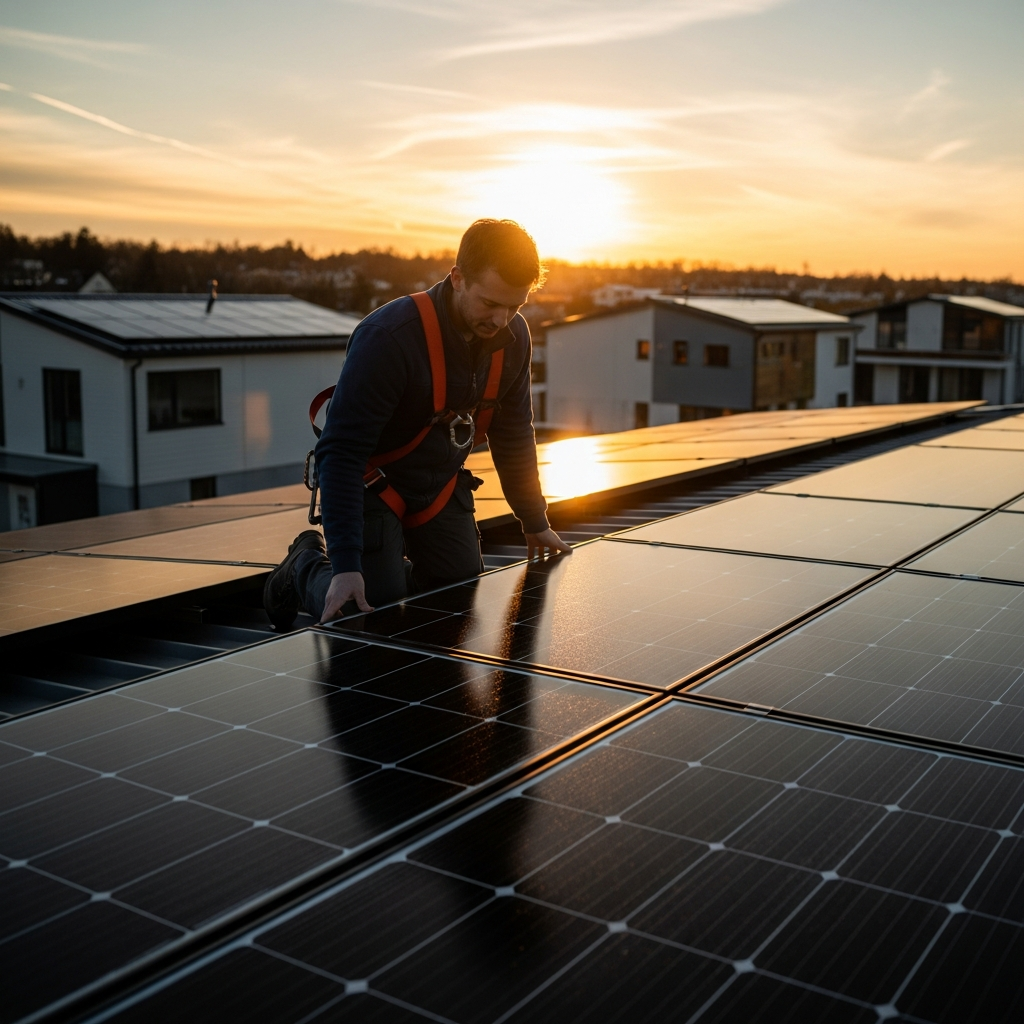
Solar Surge Alert: The 2024 Boom Is Real, So Start Caring for Solar Panels Like Your Savings Depend on It
The Solar Energy Industries Association is reporting another big year for solar, and the numbers aren’t subtle. In the Solar Market Insight Report 2024 Year in Review, SEIA shows the U.S. kept adding solar at a pace that’s changing how homeowners think about power, backup, and long-term value. Here’s the promise in plain English. If you already own solar, the next few years will reward the people who treat it like a working system, not roof jewelry. If you’re shopping right now, the best “deal” is still the install that doesn’t turn into a problem later.
Let me break it down for you. I’m Andy, third-generation contractor, and I’ve been doing solar since 2009, before most of these companies even existed. I work with NABCEP-certified pros and we’ve serviced over 3,000 systems across New Jersey and Pennsylvania. This post covers what the 2024 solar surge means for homeowners in 2026, why caring for solar panels matters more than ever, and how solar panel cleaning and solar performance monitoring keep your production from quietly slipping.
Solar is scaling fast, and homeowners feel it on the roof
Here’s what’s really going on. SEIA’s 2024 year review shows solar additions stayed strong nationwide, and that growth brings two things at once. The equipment keeps changing, and the install crews keep multiplying. Some are excellent. Some are just fast.
And when more systems go up, the service calls stack up too. We see loose clamps, chewed wiring, cracked roof flashings, and monitoring that was never set up correctly. Nine times out of ten, the homeowner didn’t do anything wrong. They just weren’t told how to maintain the system they paid for.
If you want a solid baseline on what’s happening nationally, read SEIA’s report and keep it bookmarked. Use it as your reality check when you hear big claims from a salesperson. It’s the outside reference I point people to when they ask if solar’s “slowing down” or “going away.” It isn’t. solar market insight report data shows solar is becoming normal, and that makes long-term upkeep something you can’t ignore.
What caring for solar panels means in 2026, not in a brochure
Caring for solar panels isn’t spraying a hose at the array once a year and calling it maintenance. It’s a routine that protects three things.
- Production so you don’t lose output you already paid for
- Roof integrity so the attachments don’t turn into leak points
- Safety so wiring and shutdown equipment stay compliant and dependable
Your installer should’ve explained that panels are only one piece of the system. I walk up to inverters mounted where they bake all summer, critters nesting under arrays, and homeowners who have no idea their monitoring has been offline for six months. That’s not “owner neglect.” That’s bad handoff. If you want the quick overview of what good upkeep looks like, start here and compare it to what your original installer handed you. solar panel maintenance should be boring, repeatable, and documented. That’s a compliment, by the way.
10 child keywords homeowners should know for real-world solar upkeep
You asked for caring for solar panels, but most homeowners search the “what do I do now” version of that. These are the 10 terms that come up on real service calls, and they belong in your maintenance plan.
- solar panel cleaning
- solar panel maintenance
- solar panel inspection
- solar panel troubleshooting
- solar panel repair
- solar inverter repair
- solar performance monitoring
- solar panel bird proofing
- critter guard for solar panels
- solar panel removal and reinstallation
I’m going to thread these in naturally because that’s how they show up out in the field. If you’re trying to protect production and your roof, these aren’t “extras.” This is basic ownership.
Solar panel cleaning is simple, but it’s also easy to do wrong
I’ve seen this play out a hundred times on a service call. Homeowners clean panels like they’re washing a car, and they end up scratching the glass, forcing water into a connector, or leaning a ladder right into the array frame. Then the system underperforms and everyone blames the equipment.
Solar panel cleaning should be gentle and scheduled based on your site conditions, not a random weekend project. Pollen, tree debris, highway dust, and bird activity all change the timeline. If your monitoring shows a steady dip that doesn’t match the seasons, cleaning is one of the first suspects.
If you want a practical overview of safe methods and what to avoid, this is the right place to start. solar panel cleaning is one of those topics where bad advice spreads fast, and one “quick fix” video can buy you a cracked module or a warranty headache later.
Solar panel inspection should be routine, not a panic response
Listen, I’m gonna be straight with you. Most homeowners only ask for a solar panel inspection after a storm, a roof leak, or a surprise low-bill month that turns into a high-bill month. That’s backwards.
A proper inspection checks mechanical, electrical, and roof-related items. It also checks your monitoring data so the tech isn’t guessing and you’re not paying for blind trial and error.
- Verify roof penetrations and flashing condition
- Check module clamps and rail bonding
- Inspect conduit, fittings, and exposed wiring
- Confirm inverter operation and error history
- Validate monitoring communication and production trends
This is what we do during a service visit, and it’s why diagnosis goes faster when the homeowner has a maintenance record. If you’re not sure what a real inspection includes, compare notes with residential solar maintenance guidance so you can tell the difference between a thorough check and a drive-by glance.
Solar performance monitoring catches problems long before you can see them
Here’s the part nobody talks about at the kitchen table. Your system can underproduce for months while everything looks fine from the ground. No broken glass. No obvious damage. Just lower output and a bill that slowly creeps up.
Solar performance monitoring is how you catch issues like a failed optimizer, a partial string outage, a tripped breaker, or a communications failure that hides real production. In 2026, there’s no reason to be blind. You should be able to answer two questions in 30 seconds.
- Did I produce what I should have produced this week
- If not, when did it start changing
If your app hasn’t updated in weeks, don’t assume the system is fine. That’s one of the most common calls we get, and it’s also one of the easiest to fix when it’s caught early. If you want the owner-level view of what to watch, review solar performance monitoring and then check your own portal for gaps.
Heat, weather swings, and real degradation are pushing maintenance to the front
SEIA’s year review is about market growth and deployment, but homeowners live with the physical reality up on the roof. Arrays take heat, wind, snow load, and freeze-thaw cycles year after year. That stresses connectors, seals, and electronics. (And no, your system isn’t “set it and forget it” just because the salesperson said it.)
We’ve also got more extreme weather patterns than we used to, and that changes the service calendar. After big storms, I see the same cluster of issues.
- Shifted attachments that open a path for water
- Conduit straps pulled loose by wind vibration
- Water intrusion at roof penetrations from aging sealant
If you’ve had roof work done since solar went in, or you’re planning it, don’t let a roofer “work around” the array unless they do this all the time. The clean way is to remove it and reinstall it correctly. Start with solar panel removal and reinstallation and you’ll see the difference between careful handling and careless shortcuts.
Solar panel troubleshooting is about patterns, not guessing
Solar panel troubleshooting should start with data, then move to targeted testing. The worst service calls are the ones where the last company threw parts at the problem and left the homeowner with the same issue plus new roof damage.
Bottom line is you want a process that narrows it down.
- Confirm the monitoring is accurate and current
- Check inverter status, event logs, and shutdown behavior
- Inspect the array for shading changes and physical damage
- Test strings or module-level electronics as needed
If you suspect something is off, don’t wait for a full failure. Small issues become big ones when they arc, overheat, or let water in. If you want a homeowner-friendly walkthrough of common symptoms, solar panel troubleshooting guidance is a good starting point before you call anyone out.
Solar panel repair and solar inverter repair are not handyman jobs
I’m protective of this for a reason. I’ve walked onto jobs where someone “fixed” a solar issue with electrical tape, drywall screws, and a prayer. That’s not repair. That’s an accident scheduled for later.
Solar panel repair can mean replacing a damaged module, fixing a broken connector, correcting a ground fault, or correcting a roof-adjacent problem caused by hardware movement. Solar inverter repair usually means figuring out why the inverter is derating, shutting down, or throwing internal faults, then addressing the real cause. Heat stress, airflow problems, and lousy original placement are common. Same with undersized wiring and sloppy terminations that cook over time.
If you’re trying to understand the difference between a real service company and a parts-swap operation, read solar panel repair guidance and compare it to the answers you get on the phone. A legit tech can explain failure modes in plain language and back it up with measurements and logged data.
Birds and critters are a production problem and a safety problem
If you’re in New Jersey or eastern Pennsylvania, critter activity under arrays isn’t rare. Squirrels, birds, and even raccoons treat that shaded space like prime real estate. Then they chew wiring, pack nests against hot components, and clog drainage paths on the roof.
Solar panel bird proofing isn’t about looks. It protects wiring, airflow, and your roof surface. A proper critter guard for solar panels is installed so it stays tight, doesn’t wreck your roof, and doesn’t create new corrosion points.
This is one of those areas where cheap materials and sloppy fastening cause long-term problems. If you want to see what a purpose-built approach looks like, check critter guard for solar panels options and then inspect your own array perimeter from the ground for gaps or nesting signs.
What I see after bad installs, and how Positive Energy Solutions approaches it
Here’s what really frustrates me. The solar boom brings in crews that can install fast, but they don’t stick around to service what they built. Homeowners get left holding a system with no support, no documentation, and sometimes not even working monitoring.
Our approach is boring on purpose. We document, we test, and we fix root causes. When we do maintenance or repairs, we also look for the stuff that’s going to fail next, so you’re not calling again in six months for something we could’ve caught the first time.
- We verify performance using monitoring and on-site checks
- We protect the roof because a solar system is only as good as the roof under it
- We focus on serviceability so future repairs don’t turn into expensive removals
If you want a quick example of what “serviceable” means, this page covers why systems should be designed and maintained so components can be accessed without tearing everything apart. keeping solar power systems running smoothly isn’t just a phrase. It’s a mindset that separates long-term owners from long-term headaches.
Month-by-month checklist for caring for solar panels in the Northeast
I’m not going to pretend every house needs the same schedule. A home near trees in Flemington isn’t the same as a home near the shoreline, and neither is like a subdivision in Middlesex. Still, this basic rhythm works for most homeowners we service.
Spring
Check production trends and look for pollen-related dips. If output looks soft and your roof is safe to access, schedule solar panel cleaning and a quick visual check of the array edges. If you want a framework that matches real service visits, use solar panel maintenance guidance to compare what’s being done.
Summer
Watch for inverter heat issues. If you see midday drops on clear days, don’t brush it off. That’s often when solar inverter repair calls start. For a homeowner-level overview of common inverter symptoms, review solar inverter repair info and then check your event logs.
Fall
Leaves and debris build up fast. This is also when critters start nesting. If you hear scratching near the roofline or see birds hanging around the array, take it seriously. A clean install plus solar panel bird proofing can prevent a lot of winter damage. For regional help and what to look for, see solar panel bird proofing support in Bridgewater.
Winter
Snow coverage is normal, but long periods of low output should match the weather. If it doesn’t, that’s when solar performance monitoring matters most. If you’re not sure what your monitoring should show in winter, start with solar performance monitoring basics and compare to your actual graphs.
FAQ about caring for solar panels in 2026
How often should I be caring for solar panels if my system looks fine from the ground
Caring for solar panels should be routine even if everything looks fine. Do a quick monthly check of solar performance monitoring and look for production dips that don’t match weather. Plan at least one annual solar panel inspection to catch loose attachments, wiring wear, and roof sealing issues early, before they turn into real repairs.
What are the safest ways to handle solar panel cleaning without damaging the system
Start with caring for solar panels as a safety job, not a weekend chore. Use gentle methods and avoid harsh chemicals, pressure washing, and scraping. Solar panel cleaning should also include checking that no seals, conduit fittings, or cable runs got disturbed. If your roof access is risky, hire a pro who understands roof and electrical safety.
What should I check first if my monitoring shows lower production
When caring for solar panels, start with solar performance monitoring data and confirm the system is actually reporting correctly. Then check for new shading, debris, and recent storms. If the drop is sudden, solar panel troubleshooting should include inverter status and breakers. If the drop is gradual, solar panel cleaning and a physical inspection are common next steps.
Do I need solar panel bird proofing if I have no animals in my attic
Yes, because caring for solar panels includes protecting the wiring and the roof surface, not just the attic. Solar panel bird proofing and a critter guard for solar panels stop nesting under the array where animals chew cables and pack debris. You often won’t hear anything indoors until damage is already done.
Is it normal to need solar panel repair after a heavy storm
It can be, and caring for solar panels after storms should include a solar panel inspection. Look for shifted hardware, damaged wiring, and changes in production. Solar panel repair is not always about broken glass. It can be a loosened connector, a roof penetration issue, or a problem in the shutoff equipment that only shows up under load.
When is solar panel removal and reinstallation the right move instead of patching around the array
Caring for solar panels also means caring for the roof. If you need roof work where attachments and flashing are involved, solar panel removal and reinstallation is usually the correct approach. Patching around an array often leads to leaks and stressed wiring. Done right, removal and reinstallation protects the roof warranty and keeps the electrical system intact.
What’s a realistic sign I might need solar inverter repair instead of a simple reset
If caring for solar panels includes regular monitoring, you’ll notice patterns. Repeated fault codes, frequent shutdowns on hot days, or midday production drops on clear days can point to an issue that needs solar inverter repair. A single glitch can happen. A repeating pattern means something is wrong and it should be diagnosed, not ignored.
Get Fast Quote
If your production looks off, you suspect critter damage, you need a solar panel inspection, or you’re planning roof work that requires solar panel removal and reinstallation, reach out. I’ll tell you the truth about what you’ve got, what’s urgent, and what can wait.