Solar Surge Alert: What the SEIA Numbers Mean for solar system service and Solar Energy for Africa Kampala
SEIA’s Solar Market Insight 2024 Year in Review shows the U.S. solar market kept growing fast, and residential solar capacity jumped again in 2024. Sounds like good news, and it is. But here’s the part nobody likes to talk about. When installs surge, sloppy installs surge right along with them.
In the next few minutes, I’m going to tie the big industry trend to what I actually see on roofs. What breaks, what good solar system service looks like in 2026, and what you can do this month to protect your production before weather and heat take their cut. I’ll also touch on why people searching terms like solar energy for africa kampala are asking the right kind of question. They’re really asking about reliability, not hype.
Solar is surging, but performance is earned after install
Here’s what’s really going on. The headlines celebrate volume. Homeowners live with the workmanship. SEIA’s year review is a solid place to get the facts on growth, manufacturing, and deployment across the market, and I keep telling folks to read the source instead of a sales pitch that cherry-picks the good parts.
If you want to see the data straight from the industry, start with solar energy for africa kampala in the SEIA report and then zoom out to the U.S. deployment tables. The numbers point to one simple reality. More systems are going up, and they’re going up faster.
That speed is exactly why post-install solar system service matters more than it did five or ten years ago. I’ve been doing solar since 2009, back when a lot of crews were learning on your roof. Growth is good. Growth with no accountability is how you end up with leaks, arc faults, and arrays that look great on day one and disappoint for the next ten years.
What solar system service means for today’s solar maintenance and repair
Let me break it down for you. solar system service isn’t just “hose off the panels” or “swap a part when it dies.” Done right, it’s a repeatable set of checks that catch little problems early, before they turn into roof damage or a big production hit.
Nine times out of ten, it’s something boring. A loose connector. A roof seal that didn’t age well. A critter nest under the array. A monitoring issue that hid a dead string for months. That’s why we built our process around roof-first inspection and performance verification, not guessing and hoping.
If you’re trying to figure out what a real service visit should include, start with solar panel maintenance and compare it to what your installer promised you “didn’t need.” They should’ve told you the truth. Solar is a roof-mounted power plant. Power plants get inspected.
Heat, storms, and degradation: the stuff that doesn’t show up in sales brochures
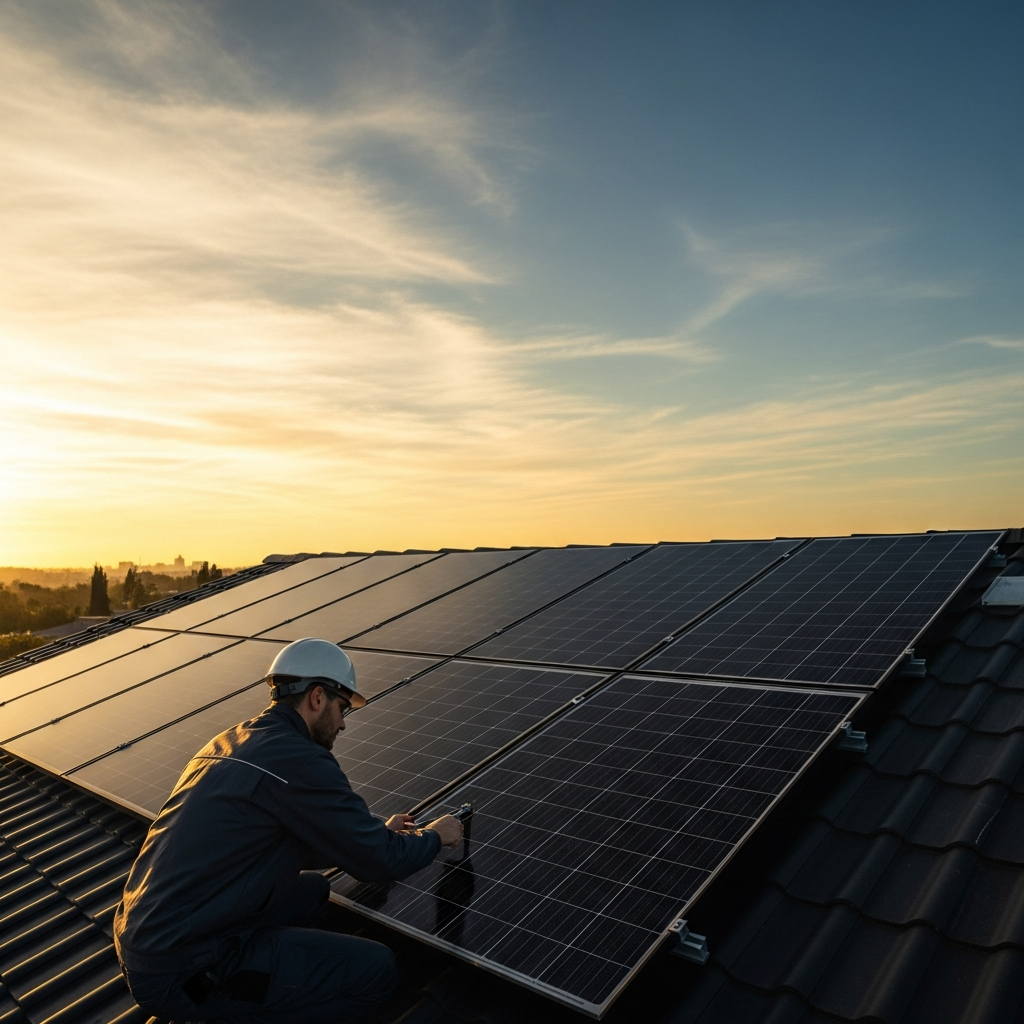
Here’s the part that never makes it into the brochure. Weather stress is a real problem for solar performance. Higher heat means lower output in the moment, and that constant expansion and contraction beats up components, roof seals, and wiring management over time.
I’ve seen this play out a hundred times after a hot summer and a windy fall. Zip ties snap. Wires sag and touch hot roofing. Junction boxes bake. Squirrels get bold when they find a warm, protected spot. Even a “small” wire management issue can turn into a shutdown, and then you’re not producing while you’re still paying for the system.
That’s why I push performance visibility early. If you want to see how pros catch losses fast, read solar performance monitoring and make sure you can see production by day, not just a feel-good monthly total.
Solar Installations Surge Amid Falling Costs: why service demand spikes right after booms
When the market ramps up, labor gets stretched thin. New crews pop up overnight. Subcontractors rotate in and out. The result is predictable. More callbacks, more roof penetrations done too fast, and more “mystery systems” where the original installer is gone or suddenly hard to reach.
Bottom line is, the boom creates a second wave. That second wave is repair and troubleshooting. People call us after they see an inverter fault, a production dip that doesn’t make sense, or staining on the ceiling under the array. That’s not theoretical. That’s drywall, insulation, and framing getting wet.
If you’re already seeing weird errors or your app went dark, start here and don’t wait for the next storm. troubleshooting and repair walks through the common failure points and how a real tech finds the cause instead of just throwing parts at it.
My 3,000-system rule: protect the roof first, then chase the kilowatts
Listen, I’m gonna be straight with you. A solar system that produces great but leaks is not a good system. I don’t care what the pretty production graph says. Once water gets into the roof deck, you’re on the clock.
Here’s the order we follow on service calls across New Jersey and Pennsylvania.
- Roof and flashing inspection around every penetration and attachment point, plus any lifted shingles near rails.
- Electrical safety checks at visible connections, conduit, and grounding points, looking for heat damage and hack work.
- Performance verification using monitoring data plus on-site validation when needed, so no one’s guessing.
If you’ve got a roofing project coming up, don’t let a roofer “work around” the array. That’s how racking gets tweaked and wiring gets pinched. Use a crew that does it the right way, like a dedicated solar panel removal and reinstallation team that documents the system before and after.
Uganda search terms are a clue: people want reliability, not hype
I know we service NJ and PA, not Kampala. Still, the fact that people keep searching best solar panels in uganda, solar panel prices in uganda, solar connect uganda, current prices of solar panels in uganda, and solar energy for africa kampala tells you something.
They’re not just shopping. They’re trying to lower their risk. In places with shaky grid conditions or fewer local service options, reliability and proper installation matter even more. Same idea here when your installer disappears, your monitoring portal gets sold to a different company, or warranty support turns into a never-ending phone menu.
Good service is local, documented, and repeatable. If you’re comparing providers, look for a company that supports your system long after install and can prove real field experience. For an example of what that looks like in real territory coverage, see our service areas and make sure your provider can actually send a qualified crew to your town, not just “put in a ticket.”
Cleaning, sealing, and critter proofing: the unglamorous wins that protect output
People love talking about panels. Panels are only part of the system. I worry more about what’s under them. Debris build-up, pollen film, and bird mess can cut production, but the bigger risk is water intrusion and animals chewing wire insulation.
Here’s a simple checklist you can knock out this month.
- Schedule a professional panel cleaning if you have heavy pollen, tree cover, or visible soiling.
- Inspect roof seals and flashing around mounts and any roof work done after the solar install.
- Add critter guards if you see nesting, hear scratching, or notice debris under the array edges.
If you’ve ever heard scurrying under an array, don’t wait. You’re not being paranoid. Start with critter solutions and make sure whoever installs guards doesn’t trap water or block natural drainage. I’ve walked behind too many “cheap fixes” that turned into chewed wiring and an inverter fault right after.
Monitoring gaps are the silent killer of production
When monitoring is down, you’re flying blind. I’ve had homeowners tell me, “The system’s fine, the lights are on.” That’s not the test. A system can be partially down for months and you’d never know without data.
Here’s what you should be able to see in 2026.
- Daily production trends, not just monthly totals
- String or module-level data if your equipment supports it
- Clear fault and alert history
- Utility meter correlation so you can spot drift
If your app is vague or it stopped reporting, you need solar system service that treats monitoring like a diagnostic tool, not a “nice extra.” Read solar power monitoring systems and make sure you can answer one question. If a string drops today, will you know this week or next season?
Service pitfalls I keep seeing after rapid install growth
SEIA’s report helps explain why the market expanded, but it doesn’t crawl your attic or lift shingles. That’s my lane. When installs surge, these problems show up more often.
- Improper roof penetrations where caulk is doing the heavy lifting instead of proper flashing.
- Loose MC4 connectors that heat up under load, then fail on and off.
- Undersized or badly routed conduit that traps water or puts stress on conductors.
- Missing labels and documentation so the next tech burns hours tracing circuits.
This is why I’m picky about who touches a system. It’s not about being fancy. It’s about being careful. If you want to see how we handle repairs when the original installer is gone, check who repairs solar panels and pay attention to the focus on diagnostics and roof safety, not just “swap the inverter and pray.”
How to vet solar system service in 10 minutes on the phone
When a homeowner calls me after another company “looked at it” and couldn’t find the issue, it’s usually because nobody followed a process. You can filter that out fast on a phone call.
Ask these questions.
- Will you inspect the roof penetrations and attic signs of moisture during service
- Do you have NABCEP-aligned techs or partner with NABCEP-certified professionals
- Can you pull monitoring data and explain it in plain language
- Do you document torque checks, photos, and findings
- Can you service removal and reinstall if I need a roof replacement
If they dodge you or rush you, move on. If you’re planning roof work, this matters even more. Use a team that does structured removal and reinstall and doesn’t pretend it’s “just unbolting panels.” Start with solar panel removal and reinstall and make sure the scope covers wiring protection, racking integrity, and keeping your roof warranty intact.
FAQ: Solar Surge Alert questions homeowners ask me in 2026
What does solar system service include after a big storm season
solar system service after storms should include a roof penetration check, a racking and clamp inspection, and a monitoring review to confirm production didn’t drop. If you’re seeing searches like solar energy for africa kampala, the theme is resilience. Wind and water find weak points fast, and rushed installs usually have more weak points.
How do I know if I need solar system service if my app still shows production
If production looks “normal” but you haven’t compared day-to-day trends, you can still be losing output. solar system service should validate strings, check for intermittent faults, and confirm sensor accuracy. People searching solar connect uganda are usually looking for real verification, not a screenshot. Ask for documented findings, not guesses.
Are best solar panels in uganda the same as what works best on NJ and PA roofs
Panel families overlap globally, but the big factors are system design, install quality, and ongoing solar system service. In hot, dusty areas, cleaning and heat handling get more attention. In NJ and PA, snow load, wind, and roof sealing are huge. The best panel in the world won’t save a bad flashing detail.
Why do people search solar panel prices in uganda and current prices of solar panels in uganda when service is the real issue
Because people connect the upfront decision to long-term risk. But yeah, solar system service is what protects performance after year one. Even if someone starts with solar panel prices in uganda or current prices of solar panels in uganda, the smart ones end up asking about durability, failure rates, and who actually fixes it. That’s the right way to think.
What’s the most common reason a system underperforms in summer heat
Heat lowers output, but most of my summer calls come from the secondary stuff. Loose connections expand and contract, wires sag, inverters run hotter, and airflow gets blocked by debris. solar system service should include visual heat-related checks when possible and a monitoring review for midday clipping or fault patterns.
How often should I schedule solar system service if I have trees and pollen
If you’ve got heavy pollen, tree cover, or bird activity, plan inspections and cleaning based on your conditions, not some random calendar reminder. solar system service should include checking seals, wire management, and critter activity. Searches like solar connect uganda tell me people want dependable uptime, and cleaning is part of that.
What should I do before hiring a crew to work near my array
Don’t let any trade touch the array area without a plan. Roofing and gutter work can wreck wiring and mounts if they’re careless. solar system service should coordinate a safe shutdown, protect conductors, and verify production after the work. If you’re comparing providers the way people compare best solar panels in uganda, also compare documentation standards and who takes responsibility when something goes wrong.
Get Fast Quote
If your production looks off, you’ve got a roof leak near the array, your monitoring is down, or you’re planning roof work, reach out. We’ll tell you the truth, even if the truth is “you don’t need us.” If you do need help, we’ll send a crew that knows roofs, takes the electrical side seriously, and documents the job so you’re protected.